
The latest data reveals a market that is slowly but meaningfully moving forward, even as persistent barriers continue to hold a significant portion of businesses back.
This quarterly overview unpacks what the data from December 2025 through February 2026 tells us about:
- where Australian small and medium enterprises (SME) stand
- what is stopping them from going further
- what it will take to close the gap.
Adoption is recovering but the work is far from done
After a slight dip in January, SME AI adoption rebounded to 44% in February 2026 – the strongest result in several months. Across the December to February quarter, 43% of Australian SMEs reported some level of AI adoption – a marginal decline from the 45% recorded in the previous quarter (September to November 2025).
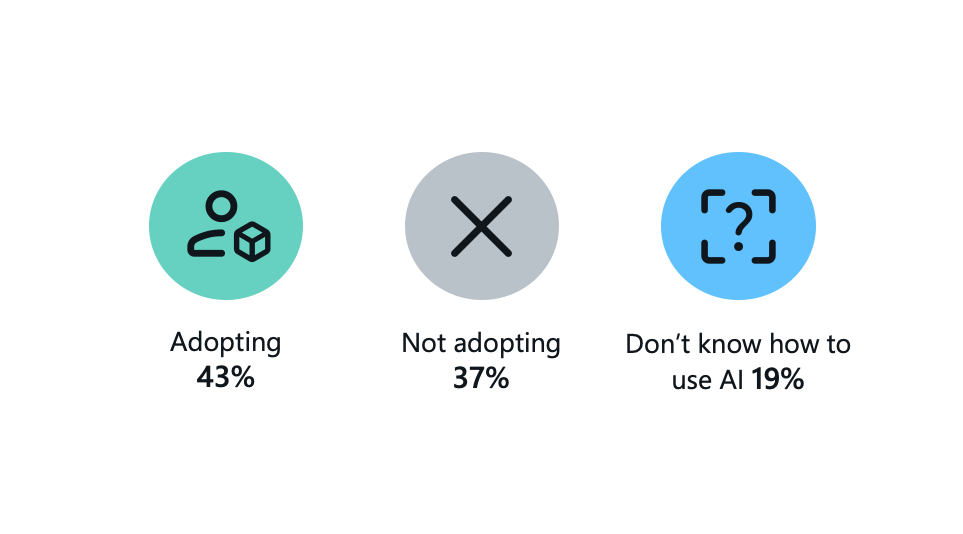
While the headline number may appear modest, the story within the adopter cohort is encouraging. Among businesses already on the AI journey, there is a clear shift from surface level experimentation toward deeper integration.
Broad adoption – where AI is embedded across multiple parts of the business – has reached its highest level in 7 months.
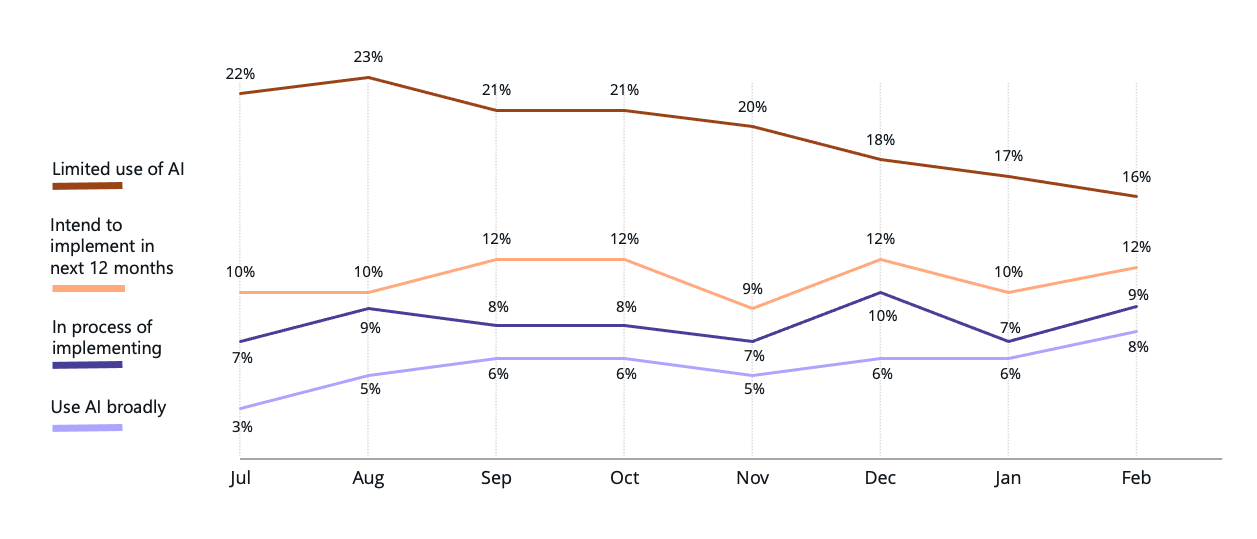
Limited, one-off use is declining. In short, those who have committed to AI are doubling down. This maturation signal matters. It suggests that once businesses experience the tangible benefits of AI, they tend to expand their use rather than retreat. The challenge, then, is getting more businesses through the door in the first place.
The three barriers holding SMEs back
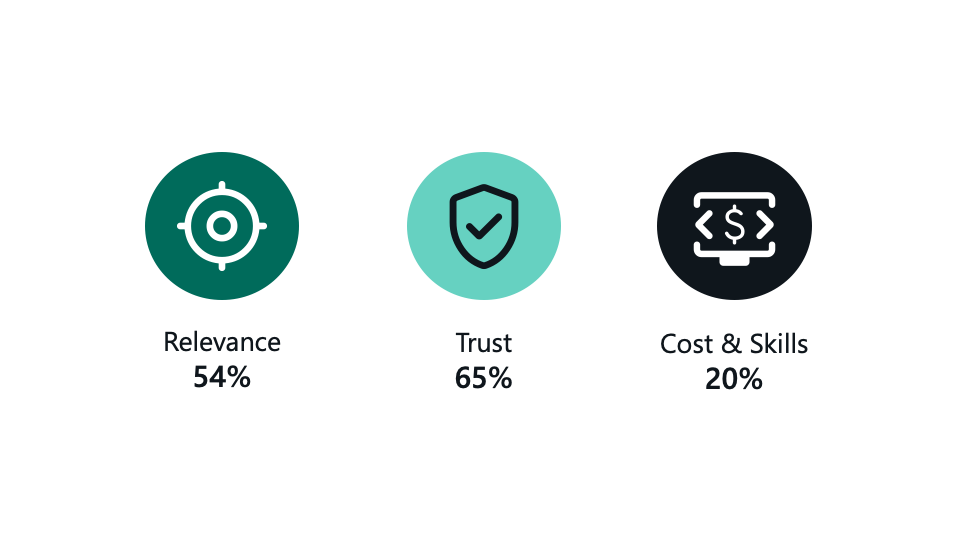
The survey identifies three distinct barriers that explain why more than half of Australian SMEs are yet to meaningfully adopt AI.
1. Trust remains the dominant barrier
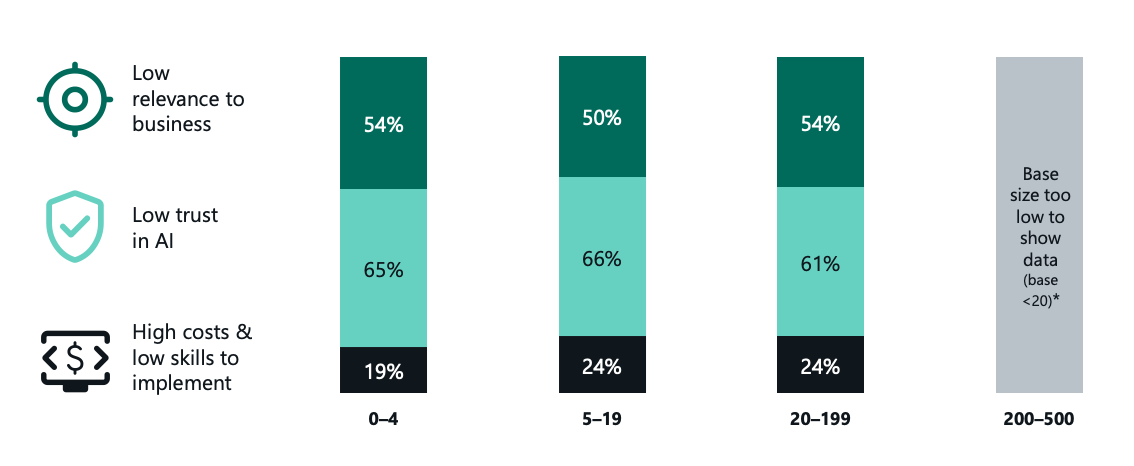
Across the quarter, trust emerged as the single biggest reason businesses are not adopting AI. Around 65% of non-adopting businesses cited either a distrust in AI decision-making or a strong preference to maintain human control over their business processes.
This finding is consistent across business sizes and geographies. It signals that the conversation around AI adoption can’t be reduced to capability or cost alone – it is fundamentally a question of confidence. Businesses need to understand how AI makes decisions, what safeguards exist, and how they remain in control. Without that assurance, investment decisions stall.
2. Many SMEs can’t see the relevance
More than half of non-adopting businesses (54%) said that AI is not relevant to their business. This is a significant finding and arguably the most addressable one. It doesn’t reflect a rejection of AI so much as an absence of visible, relatable examples of what AI actually looks like in practice for businesses like theirs.
The relevance gap is particularly pronounced in industries like Construction and Agriculture, where fewer than 30% of businesses are currently adopting AI. In contrast, the Health and Education and Services sectors are leading adoption, with more than half of businesses in those sectors actively using AI. The difference isn’t capability, it is context. Businesses need to see themselves in the story of AI adoption.
3. A significant portion don’t know where to start
Nineteen percent of SMEs – up 2% from the previous quarter – reported they simply don’t know how to use AI in their business. This group sits in a particularly difficult position: they aren’t opposed to AI, but they lack a clear entry point.
The “don’t know how” segment represents one of the most important opportunities for targeted intervention. These businesses aren’t cynical or resistant – they are disoriented. Clear, practical guidance on where to begin, what tools to consider, and how to take a first step is what this cohort needs most.
What adopters are actually using AI for
Among businesses that are currently using or planning to use AI, content generation and data analytics lead the way, with 54% of adopters using AI for each. Cybersecurity and threat detection follows closely at 48%. These top applications share a common thread: they are productivity-oriented and relatively low-risk to experiment with.
Businesses are starting where they feel most comfortable and where the use case is clearest. More complex applications – such as agentic AI, supply chain optimisation, and AI-assisted HR – remain largely untapped, reflecting both a lack of awareness and a lack of confidence in understanding how these tools work.
Responsible AI: practice is ahead of policy
One of the more nuanced findings of this quarter relates to responsible AI practices.
Among businesses currently using AI, the most common safeguard is checking AI outputs before they affect customers. Approximately half of current users have this in place. However, practices around transparency with customers about AI use and formal processes for customers to raise concerns lag significantly. This points to a gap between internal operational safeguards and outward-facing governance. Businesses are protecting their own processes but haven’t yet extended that accountability to their customers and stakeholders. As regulatory expectations evolve and public scrutiny of AI grows, this gap is likely to become a source of risk for SMEs that haven’t thought through their customer-facing AI governance.
What this means for the path forward
The data from this quarter paints a clear picture of where the biggest opportunities lie. Adoption is growing, but unevenly. The businesses most likely to be left behind are regional, smaller or operating in sectors where the relevance of AI is less immediately obvious.
Closing the gap will require more than awareness campaigns. It needs practical, accessible guidance that meets businesses where they are – whether that’s starting to understand what AI is, working out which tools are right for their context, or navigating the governance and trust questions that arise once adoption begins.
This points to the value of practical, accessible support that helps organisations plan their approach, understand appropriate use cases, and put proportionate safeguards in place. This will enable organisations to adopt AI in ways that are effective, responsible and aligned with their business context.