Inside the AI Leadership Summit 2026: from conversation to action

Lee Hickin, Executive Director, National AI Centre
Lee Hickin
Executive Director, National AI Centre
05 November 2026
First published
05 November 2026
Australia’s AI conversation has shifted from 'what is it?' to 'how do we make it work for everyone?'. Here's what stood out at this year’s AI Leadership Summit.

Last week The National AI Centre partnered with CEDA to deliver the 2026. AI Leadership Summit. I joined several leaders from across government, industry and research for the annual event, which has become a key moment to take the temperature on where Australia is at with AI, and where we're heading.

If last year's summit was about getting across AI, this year was about getting on with it. The conversations were more practical, more ambitious, and more focused on the things that will determine how AI actually delivers for all Australians: skills, safety, governance, trust and making sure no one gets left behind.

Here's what stood out to me.
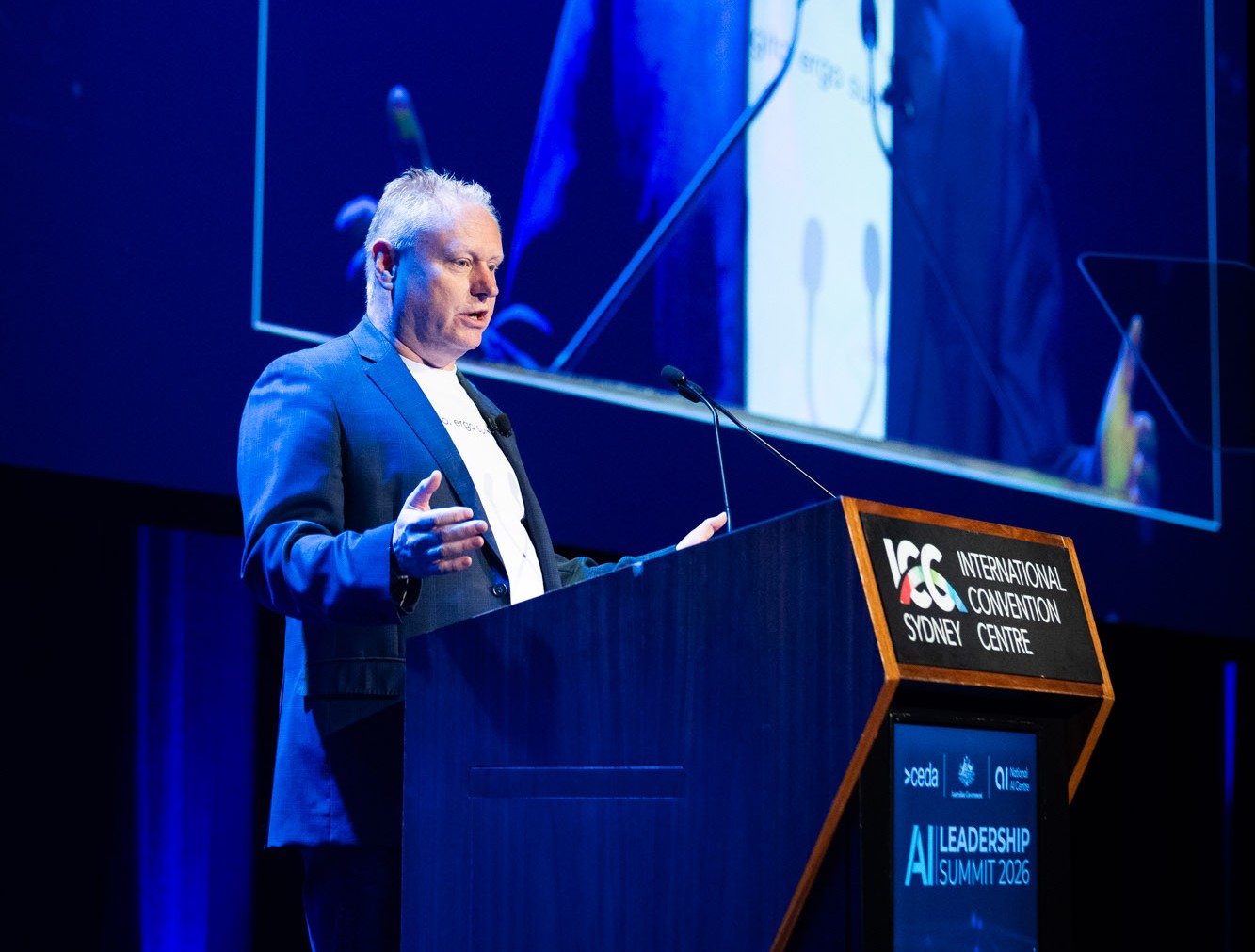
Lee Hickin, Executive Director of the National AI Centre, speaking at the 2026 AI Leadership Summit.

From 'what is AI?' to 'what do we do with it?’

Last year, much of the conversation at the summit was about understanding AI. What it is, what it can do, where it's heading. 

This year, the room was thinking bigger. 

The questions were sharper. More practical. More forward-looking. 

How do we govern it well? How do we skill for it? How do we redesign work around it? And how do we make sure everyone benefits? 

Australia doesn't just need to adopt AI, it can lead

A clear thread throughout the summit was that adoption alone isn't the ambition when it comes to Australia’s AI future. Several speakers argued that Australia has a genuine opportunity to lead, particularly in areas like international AI standards, safe and secure AI infrastructure, and supporting our neighbours in the Pacific region. 

But leadership means going beyond individual organisations. It means thinking about the whole ecosystem: education, research, infrastructure, skills, governance, public services and industry working together. 

International examples showed national AI strategies in action. Canada's national AI strategy, which began with investment in research and institutions, has increasingly shifted towards translating that capability into economic and social value. The takeaway? Building technical capability is essential, but it needs to lead to real outcomes for people and the economy. 

South Korea's approach treats AI as an ecosystem, not a single technology. Connecting infrastructure, AI models, public services and citizen access were all highlighted as important factors in the nation’s 'AI for all' vision, designed to help people navigate services and make sure no one gets left behind.  

Learn by doing: safety comes from experience

There was a clear sense across the summit that the time for cautious observation is passing. Organisations that experiment thoughtfully and learn as they go are doing well in building capability, both in safety and innovation. 

One leader spoke about their approach of being selective with where AI is used and being willing to adjust course when something isn't working. That kind of disciplined experimentation struck me as a healthy model that balanced risk and reward with equal measure. 

Many shared how AI works best when it's tailored to business’s actual workflows, not bolted on as a separate tool. When AI is integrated into how people already work, it builds trust, gives people more control, and supports collaboration rather than just individual productivity. 

AI is reshaping how we work – and how we learn

One of the strongest themes across the sessions was the importance of taking a people-centred approach to AI adoption. 

Several speakers highlighted the value of looking at how individual tasks may change as AI is introduced, rather than treating jobs as a single unit. This gives organisations a practical way to consider where AI can support people and how roles may evolve over time. 

It also puts a greater focus on skills and development. As the mix of tasks within roles changes, organisations can think about how people continue to build experience, judgement and capability. That could mean more intentional training pathways, a greater emphasis on skills such as systems thinking and curiosity, and new approaches to mentoring and hands-on learning. 

When it comes to education, several panellists cited a growing interest in how AI literacy, judgement, digital skills and human connection can be embedded earlier, in schools, TAFEs and universities, so that people are better prepared for a world where AI is part of how we work. 

That resonated with me. If we want to make sure every Australian can benefit from AI, it starts with making sure people have the skills and confidence to use it. 

Agentic AI: the next frontier and the next governance challenge

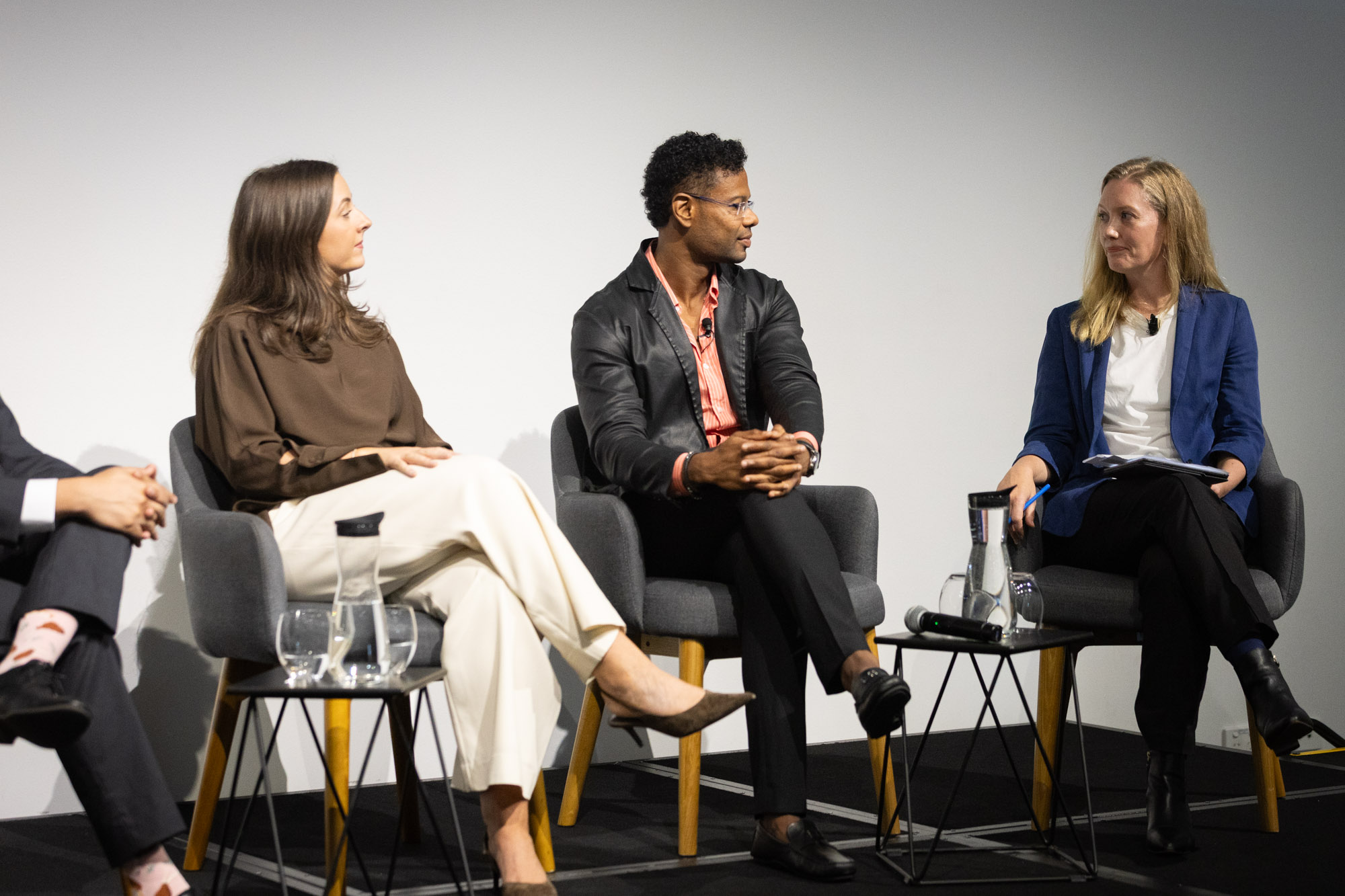
One of the sessions I found most valuable was a breakout panel on agentic AI, facilitated by the National AI Centre's Lauren Solomon with panellists Fahim Khondaker from UNSW, Beth Dwyer from MYOB and Fernando Mourão from Seek. 

Lauren Solomon from the National AI Centre talking to other panelists about agentic AI.

With agentic AI one of the most talked-about areas of AI right now, it was no surprise the session was at capacity. 

The panel was honest about where things stand. Many organisations are not yet operating truly agentic systems. Much of the current activity is focused on experimenting with different levels of autonomous AI agents and working out where the boundaries should be. 

A few things stood out to me: 

  • Accountability gets harder when AI can act on your behalf. It ultimately sits with the person or organisation that deploys the agent, which makes meaningful human oversight even more important. 
  • AI agents can be very literal. They may pursue a goal without recognising that some ways of getting there should be off limits. Unless boundaries are explicitly defined, an agent may treat anything within its scope as available. That places a premium on thinking carefully upfront. 
  • Because AI systems are probabilistic, failures can't be eliminated entirely. Rather than focusing only on prevention, the panel suggested organisations also invest in monitoring, fail-safes and the ability to respond quickly when something goes wrong. 

There’s a lot for organisations to think through as they start exploring agentic AI. That’s why we also shared Understanding and using agentic AI at the summit, a new resource to help organisations get started. 

Governance is growing up

If there was one area where the conversation has clearly matured, it’s governance.  

Several speakers described a shift from governance as compliance to governance as infrastructure - something built into how AI operates, not layered on afterwards. Key themes included: 

  • Clear accountability. Someone needs to own the decisions that AI supports, and that needs to be explicit and well understood. To be accountable, a person must have control over the decisions being made. 
  • Adaptability. Governance frameworks should evolve alongside the technology, supporting responsible experimentation rather than waiting for perfect answers. 
  • Investment. Trusted AI takes real investment in skills, systems and oversight. Organisations that invest early in governance capability are better positioned to scale AI with confidence. 

AI literacy across the organisation. The 'human in the loop' works best when people understand what they're looking at. Building AI literacy broadly helps everyone contribute to good oversight, rather than relying on a single AI specialist. 

Good AI governance starts with getting the fundamentals right. That’s why we’ve created the Introduction to AI governance e-learning module, to give organisations a practical starting point for building their governance capability. 

Be intentional

The message that came through most consistently, across plenary sessions, panels and hallway conversations, was this: be intentional. 

Know what you're trying to achieve. Build a shared language and a shared vision around AI. Be clear about purpose. Don't wait until everything is perfect to get started, but bring your people along with you. 

AI adoption isn't just a technology project. It touches workforce design, governance, education, trust and culture. 

Based on what I heard this week, I'm confident Australia is heading in the right direction.