ISS Health Services provides food and support services in complex environments, including healthcare settings. Their teams manage high-volume food preparation while meeting strict operational, safety and quality requirements.
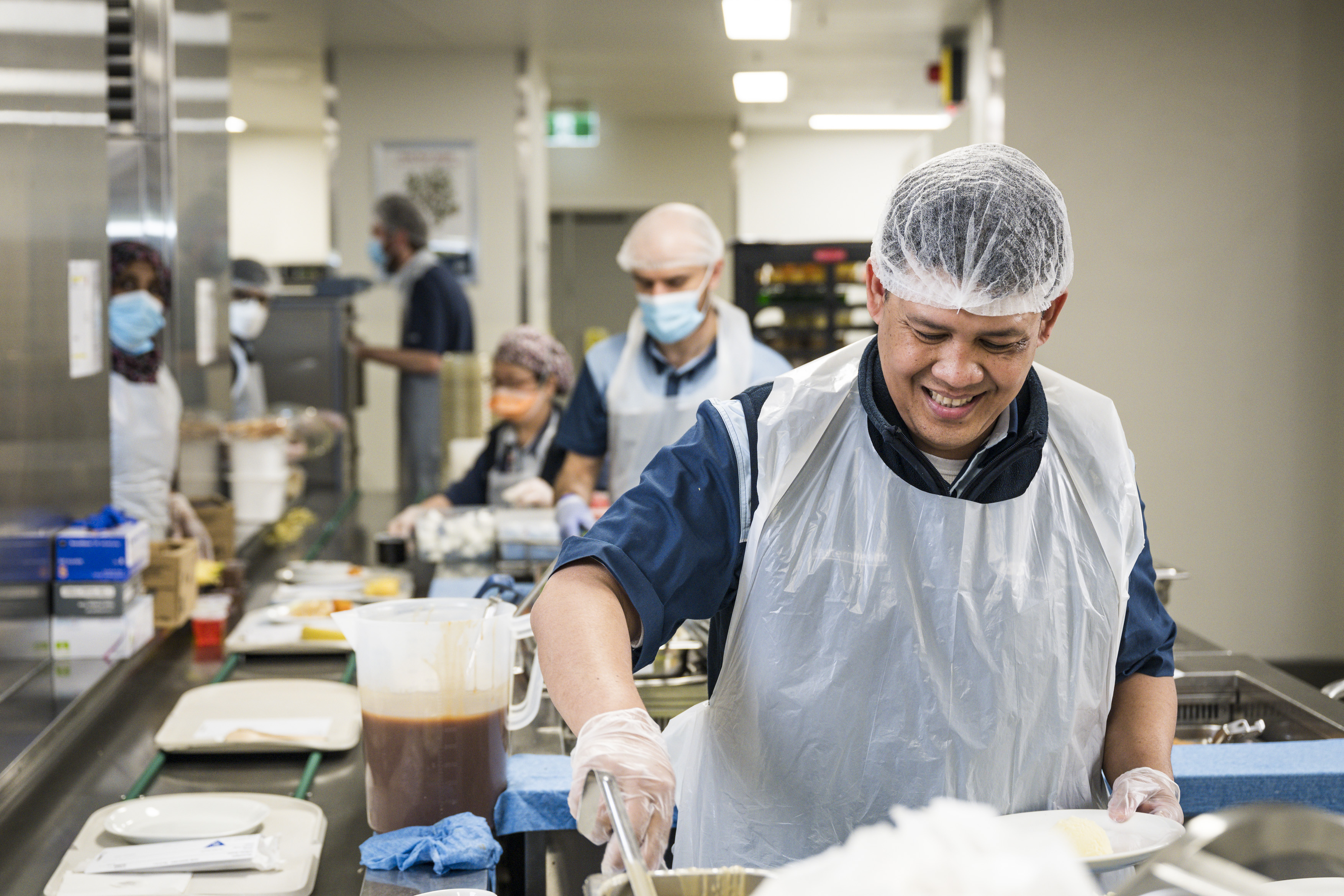

ISS Health Services provides food and support services in complex environments, including healthcare settings. Their teams manage high-volume food preparation while meeting strict operational, safety and quality requirements.
Australia wastes around 7.6 million tonnes of food each year, costing the economy over $36 billion annually. In large‑scale food service environments, this waste is often hard to see in real time.
Estimating demand accurately is challenging, and over‑production can quickly lead to unnecessary waste and higher costs. Frontline teams are focused on delivering meals safely and reliably, leaving limited time to manually track waste or identify patterns.
ISS needed a better way to understand food waste trends and support informed decisions, without adding to staff workload or administrative effort.
ISS took a targeted, problem-first approach to addressing food waste, focusing on improving visibility without adding complexity for frontline teams.
By installing AI enabled cameras above food return areas in the kitchen, ISS was able to capture food waste data and identify patterns that were difficult to see through manual monitoring alone.
This provided teams with clearer, more timely insights to support planning and decision-making, without increasing staff effort to calculate wastage or manually process data for reporting.
AI has improved visibility of food waste patterns, enabling earlier intervention and more informed planning decisions.
By reducing the need for manual monitoring and reporting, ISS has freed up staff time for critical service delivery, while improving efficiency and supporting waste reduction across operations.
This case study was developed in partnership with Australian Industry Group as part of the National AI Centre’s AI Industry Connections program.